
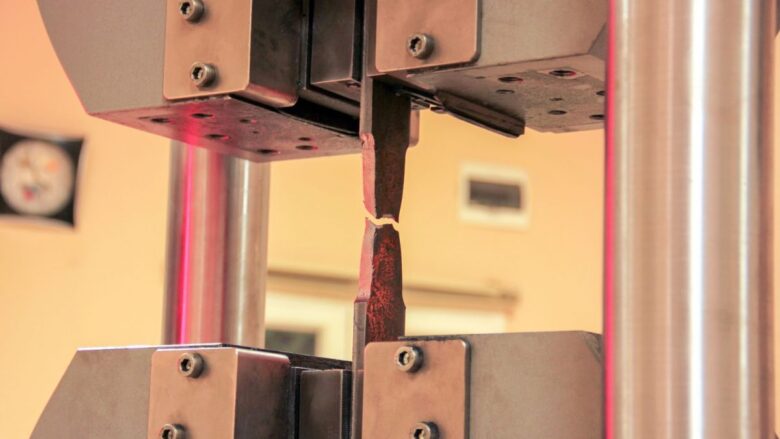
A Universal Testing Machine (UTM) is a crucial piece of equipment in materials testing, playing a key role in determining the quality and mechanical characteristics of a material. This tool is used to measure tensile, compressive, flexural, and shear strength in various materials, such as metals, plastics, and composites.
A thorough understanding of how a UTM works and the test results obtained is crucial, especially for researchers, engineers, and practitioners in the manufacturing and materials engineering fields.
Universal Testing Machine Operating Principle
The UTM’s operating principle is based on the concept of applying a specific load to a material to determine its response or mechanical behavior to that force. In general, a UTM works by applying a tensile, compressive, or flexural force to a test specimen through an actuator or screw drive system. It then measures the magnitude of the force and the resulting change in length or deformation until the material fails or fractures.
The testing process begins by clamping the specimen in a grip or fixture adapted to the type of test. The machine then gradually applies a measured force through a load cell, while an extensometer, or displacement sensor, records the material’s dimensional changes in real time.
The force and strain data are processed by software to generate a stress-strain curve, which serves as the basis for determining mechanical properties such as tensile strength, elastic modulus, and yield point.
Main Components of a Universal Testing Machine
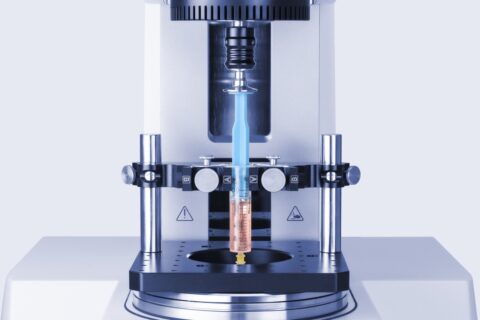
A UTM consists of several main components that work together to ensure accurate and controlled material testing. Each component has a specific function that supports force application, measurement, and data recording during testing. The main components are as follows:
Load Frame
This is the main structure of the UTM, supporting the entire system. It is typically made of very strong and rigid steel to prevent deformation during testing. This frame consists of two vertical columns and a crossbeam that resists the force during tensile or compressive testing.
Load Cell
Load cells measure the force applied to a specimen. These sensors operate based on the principle of changes in resistance or electrical voltage due to internal deformation. The accuracy of the load cell is crucial, as test results depend on the precise measurement of the applied force.
Crosshead
The crosshead is the part that moves up or down during testing to apply tensile or compressive force to the specimen. The speed and direction of its movement are electronically controlled to comply with the testing standards used.
Grips and Fixtures
These components are used to clamp and hold the test specimen during testing. Types vary depending on the shape and type of material being tested, such as grips for tensile testing, flat plates for compression testing, or special fixtures for flexure testing.
Extensometer or Displacement Sensor
This tool measures the change in length of a specimen when a force is applied. Data from an extensometer is crucial in determining the elastic and plastic properties of a material.
Control System and Software
This system controls the movement of the crosshead, collects data from sensors, and displays test results in the form of stress-strain graphs. In modern UTMs, control and analysis are performed digitally using software capable of storing, processing, and displaying data in real time.
All of these components work in an integrated manner to produce accurate, consistent, and reliable test data, making the Universal Testing Machine an indispensable tool in engineering and materials science.
Tests That Can Be Performed
The Universal Testing Machine (UTM) is designed to perform various types of mechanical tests on materials to understand their properties and behavior under specific forces. Due to its versatility, the UTM can be used for tensile, compressive, flexural, shear, and several other specialized tests. The following is an explanation of each commonly performed test type:
Tensile Test
This test is one of the most basic and important tests performed using a UTM. In a tensile test, the specimen is slowly pulled until it breaks to determine the material’s ultimate tensile strength, modulus of elasticity, yield point, and elongation. The results of this test help determine the material’s ability to withstand tensile loads before failure.
Compression Test
In this test, a force is applied in a compressive direction until the material deforms or breaks. Compression tests are typically applied to materials such as concrete, ceramics, wood, and hard plastics to determine their compressive strength and plastic deformation behavior.
Flexural Testing
A flexural test is performed by applying a force at the center or at several points on a specimen supported at both ends. The goal is to measure the flexural strength and modulus of elasticity, which are important in assessing materials such as composites, plastics, or thin metals.
Shear Testing
This test is performed to determine the shear strength of a material by applying a force parallel to its surface. Shear testing is often used to assess fasteners, welded joints, or bolts in construction and manufacturing.
Tear and Peel Testing
This type of testing is typically used for non-metallic materials such as rubber, plastic, films, and adhesives. The tear test measures the force required to tear the material, while the peel test measures the adhesion strength between layers of material.
Creep and Fatigue Testing
Some modern UTM models are equipped with additional features for creep and fatigue testing. This type of testing is crucial in engineering applications that require high durability, such as aircraft, vehicles, and bridges.
With the ability to perform these various types of testing, the Universal Testing Machine s a highly flexible and essential tool for ensuring the reliability, safety, and quality of materials before they are used in production or construction processes.